Nuclear medicine specialists in Türkiye
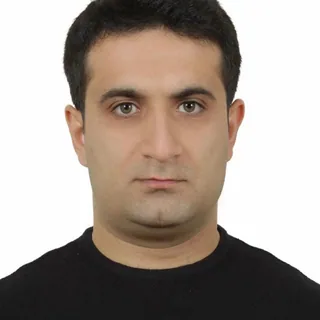
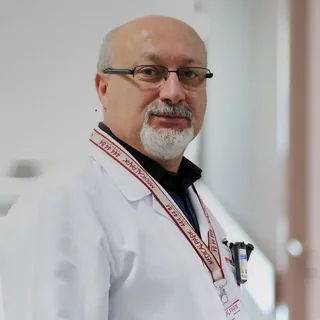
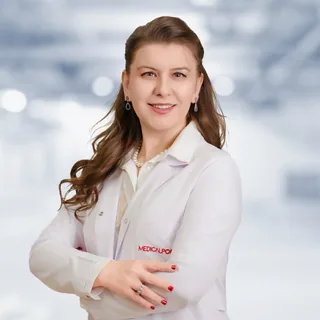
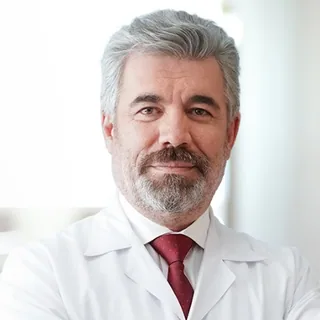
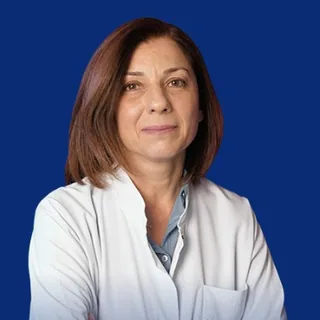
51 nuclear medicine specialists in Türkiye are listed on Medicaltour, practising at 42 private hospitals and clinics that hold the Ministry of Health's health-tourism authorization.
20 hold the title of professor. 5 are associate professors. 21 report 20 or more years of experience. Languages stated: English (3). By city: Istanbul (26), Ankara (6), Gaziantep (4), Izmir (2), Kocaeli (2), Samsun (2).
- Experience
- 22 years
- Experience
- 33 years
- Education
- Medical degree, Gülhane Military Medical Academy (1984-1990)
- Clinical interests
- Radioactive iodine therapy
- Experience
- 24 years
- Experience
- 27 years
- Training
- Specialty training in Nuclear Medicine at Cerrahpaşa Faculty of Medicine (2002)
- Clinical interests
- Postgraduate education and academic work in nuclear medicine
- Memberships
- Member of Turkish Society of Nuclear Medicine
- Member of European Association of Nuclear Medicine
- Experience
- 29 years
- Experience
- 28 years
- Education
- Graduated from Çukurova University Faculty of Medicine in 1998
- Training
- Specialty training in Nuclear Medicine at Gülhane Military Medical Academy (2002-2005)
- Clinical interests
- All nuclear medicine scintigraphic imaging methods, Thyroid ultrasound, Ultrasound-guided thyroid fine needle aspiration biopsy, Sentinel lymph node marking, Radioactive iodine-131 therapy, Lutetium-177 peptide therapy for prostate cancer and neuroendocrine tumors, and 3 more
- Memberships
- Member of Turkish Society of Nuclear Medicine
- Member of Ankara Medical Chamber
- Publications
- 30 articles published in international peer-reviewed journals
- Languages
- English
- Experience
- 28 years
- Experience
- 18 years
- Education
- Dicle University Faculty of Medicine, 1989
- Clinical interests
- Ga-68 PSMA PET-CT
Selahattin Albayrak
Assistant Professor · Nuclear Medicine
VM Medical Park Samsun Hospital · Atakum, Samsun
- Experience
- 6 years
İnanç Karapolat
Professor · Nuclear Medicine
Izmir Tınaztepe University Galen Hospital · Bayraklı, İzmir
- Experience
- 13 years
- Education
- Graduated from Süleyman Demirel University Faculty of Medicine in 2007
- Training
- Specialty training in Nuclear Medicine at Süleyman Demirel University Faculty of Medicine (2008–2013)
- Clinical interests
- Oncology PET/CT, Myocardial perfusion scintigraphy, Scintigraphic methods
- Experience
- 11 years
- Education
- Graduated from Azerbaijan Medical University Military Medical Faculty in 2015
- Training
- Specialty training in Nuclear Medicine at Gülhane Training and Research Hospital (2017-2021)
- Clinical interests
- Routine scintigraphic diagnostic methods, PET/CT, Thyroid ultrasound, Thyroid fine needle aspiration biopsy
- Memberships
- Member of Turkish Society of Nuclear Medicine
- Languages
- English
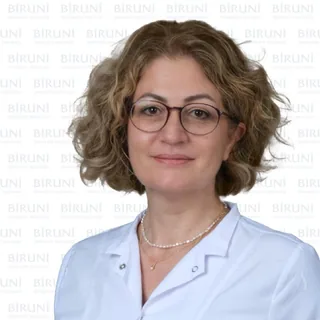
Nesrin Aslan İlkmen
M.D. Specialist · Nuclear Medicine
Biruni University Faculty of Medicine Hospital · Küçükçekmece, İstanbul
- Experience
- 34 years
- Experience
- 10 years
- Experience
- 45 years
Mahmut Yükse
Professor · Nuclear Medicine
Altınbaş University Medical Park Bahçelievler Hospital · Bahçelievler, İstanbul
- Experience
- 26 years
- Clinical interests
- Prostate cancer treatment with Lu-177 PSMA
- Treatments
- Neuroendocrine Tumor Treatment with LUTATHERA (Lu-177 Dotatate), Nuclear Cancer Treatments, Prostate Cancer Treatment with Lu-177 PSMA
Füsun Kökçü Aksoy
Associate Professor · Nuclear Medicine
Gaziantep Medicalpoint Hospital · Şehitkâmil, Gaziantep
- Experience
- 26 years
- Experience
- 41 years
- Experience
- 4 years
- Experience
- 30 years
- Training
- Specialization at Istanbul University Cerrahpaşa Faculty of Medicine (2004)
- Memberships
- Member of Turkish Society of Nuclear Medicine
- Member of European Association of Nuclear Medicine
- Member of American Society of Nuclear Medicine
- and 2 more
- Languages
- English
- Experience
- 34 years
- Experience
- 31 years
Where they practise
The hospitals and clinics where the most doctors on this list work.
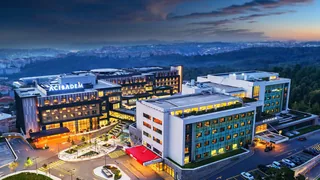
JCI-accredited Acıbadem Maslak Hospital, founded 2009: 231 beds, 75 chemotherapy rooms, robotic surgery, IVF center, NICU and Health Point Center.
Acıbadem Maslak Hospital was founded in 2009 within Acıbadem Healthcare Group, and the hospital states that a new building of 60 thousand m2 was added in an enlargement project finalized in 2018.
It lists 231 patient beds, 51 intensive care beds, 20 general operating rooms and 3 IVF operating rooms.
- Founded
- 2009
- Doctors listed
- 263
- Capacity
- 231 patient beds
- 20 general operating rooms and 3 IVF operating rooms
- Group or operator
- Part of Acıbadem Healthcare Group
- Technology
- TrueBeam, da Vinci, EOS, whole-body MRI, Trilogy, intraoperative radiotherapy, PET-CT, MR Linac and Rapid Arc, Force CT, SPECT-CT, 3 Tesla MRI, Intraoperative 3 Tesla MRI, Single-dose radiotherapy, 3D tomosynthesis mammography, and 2 more
- For international patients
- Health tourism authorization certificate number ST-0292
- Health Point Center for international patients follows their diagnostic and treatment processes
- Languages
- Albanian, Arabic, Bulgarian, English, French, Georgian, Russian, Serbian
- Accreditations
- ISO 9001, JCI
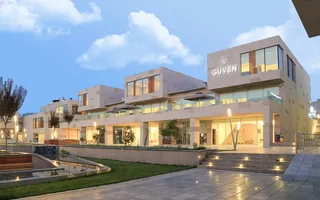
Ankara hospital founded in 1975, part of Güven Healthcare Group, with JCI and Planetree Gold accreditation and organ and bone marrow transplant centers.
Cancer care involves the Radiation Oncology and Nuclear Medicine departments.
- Founded
- 1975
- Doctors listed
- 133
- Group or operator
- Part of Güven Sağlık Grubu (Güven Healthcare Group)
- Technology
- Force CT, SPECT/CT, PET/CT, 3 Tesla MRI, Intraoperative 3 Tesla MRI, TrueBeam radiotherapy system, Single-dose radiotherapy, 3D tomosynthesis mammography, and 4 more
- For international patients
- Transfer service
- Translation service
- Accommodation consultancy service
- Languages
- Albanian, Arabic, Bosnian, Bulgarian, English, French, Georgian, Italian, Russian, Somali, Uzbek
- Accreditations
- JCI
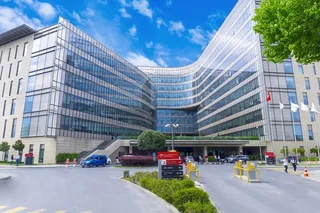
Koç University Hospital
Universitätsklinikum (Stiftung) · Zeytinburnu, İstanbul
2 doctors on this list
Foundation university hospital opened in 2014, part of VKV Health Institutions, with transplant, cancer, IVF and robotic surgery centers.
Radiation Oncology and Nuclear Medicine and Molecular Imaging operate as separate departments.
- Founded
- 2014
- Doctors listed
- 221
- Group or operator
- Part of VKV Health Institutions (Vehbi Koç Foundation)
- Technology
- Da Vinci robotic surgery system, PET/CT, SPECT/CT, 3 Tesla MRI, Angiography, Endoscopic ultrasound (EUS)
- For international patients
- Transfer service
- Translation service
- Languages
- Albanian, Arabic, Bosnian, Bulgarian, English, French, German, Greek, Persian, Romanian, Russian, Serbian, Ukrainian, Uzbek
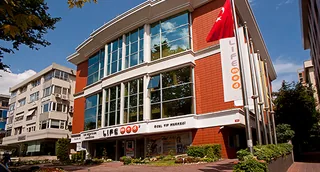
Medical center founded in 2005 with PET/CT, Ga-68 PSMA imaging, check-up packages, an aesthetic clinic and home health services.
Lifemed Medical Center pairs its outpatient clinics with nuclear cancer treatments, listing actinium therapy alongside Ga-68 PSMA and Ga-68 Dotatate imaging.
- Founded
- 2005
- Doctors listed
- 21
- Technology
- PET/CT, 3D tomosynthesis mammography, Computed tomography (CT), Digital radiography (DR), Bone densitometry, Doppler ultrasound, Panoramic dental X-ray
- For international patients
- Translation service
- Languages
- Bulgarian, English, Italian, Russian, Spanish
- Accreditations
- ISO 9001
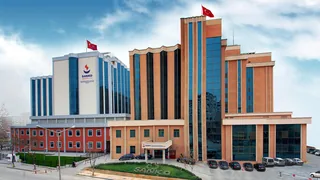
SANKO University Hospital: TÜSKA accreditation, 10 operating rooms, bone marrow transplant and IVF centers, PET/CT and intraoperative 3 Tesla MRI.
Cancer care covers radiation oncology and nuclear medicine, with radiation therapy and prostate cancer treatment with Lu-177 PSMA on the treatment list.
- Founded
- 2022
- Doctors listed
- 71
- Capacity
- 10 operating rooms
- Technology
- Operating rooms equipped with laminar air flow and HEPA filters, PET/CT, 3 Tesla MRI, Intraoperative 3 Tesla MRI, 3D tomosynthesis mammography, Angiography, Endoscopic ultrasound (EUS), Contrast-enhanced mammography (CEM)
- For international patients
- Transfer service
- Translation service
- Accommodation consultancy service
- Languages
- Arabic, English
- Accreditations
- ISO 14001, TÜSKA
Questions about this list
How many nuclear medicine specialists in Türkiye are listed?
51 nuclear medicine specialists in Türkiye are listed on Medicaltour, practising at 42 private hospitals and clinics that hold the Ministry of Health's health-tourism authorization.
Who are the most experienced nuclear medicine specialists in Türkiye?
By the years of experience reported on HealthTürkiye: Yusuf Zeki Çelen (45 years), Muhteşem Burak (43 years) and Emel Öztürk (42 years).
Where do nuclear medicine specialists in Türkiye practise?
They practise at 42 private hospitals and clinics that hold the Ministry of Health's health-tourism authorization. The most doctors on this list work at Acıbadem Maslak Hospital (3), Ankara Güven Hospital (3) and Koç University Hospital (2).
How many nuclear medicine specialists in Türkiye are professors?
Of the 51 listed, 20 hold the title of professor and 5 are associate professors, as registered on HealthTürkiye.
Which languages do nuclear medicine specialists in Türkiye speak?
Languages stated for individual doctors on their clinics' websites: English (3).
Which cities have the most nuclear medicine specialists in Türkiye?
By the city on the Ministry of Health's list: Istanbul (26), Ankara (6), Gaziantep (4), Izmir (2), Kocaeli (2), Samsun (2).
About this specialty
In EnglishNuclear medicine uses small amounts of radioactive material in imaging tests that show how organs and tissues are working.
What this specialty covers
Nuclear medicine uses imaging tests based on a tiny dose of a radioactive substance, known as a radiotracer. These tests show how an organ or tissue is functioning, not only its shape. A dedicated camera picks up radiation from inside the body and can reveal organ function, blood flow or tissue activity.1
Common uses include checking the heart, lungs or kidneys, doing bone scans, assessing the thyroid and seeing whether cancer treatment is having an effect. A PET (positron emission tomography) scan helps diagnose and plan care for conditions such as cancer, and it can show the stage, meaning how far a cancer has spread. An RBC (red blood cell) nuclear scan tags red blood cells to follow their movement, most often to locate bleeding in the digestive tract.1,2,3
Who it is usually for
Most nuclear scans are generally not advised during pregnancy or breastfeeding, so patients are asked to say if either may apply. Children and teenagers react more strongly to radiation than adults, so the radiation risk is higher for them. Before a PET scan, the hospital should know about any medicines, any condition that makes lying still hard, and whether fasting is a problem, for example with diabetes.1,2,3,4
What a visit usually involves
The radiotracer may be injected, swallowed as a pill or liquid, or breathed in as a gas. The tracer moves to the area under study, and how much of it collects there helps show how that organ or tissue is working. A gamma camera, SPECT scanner or PET scanner then detects the radiation and builds images. A person may lie, sit or stand, and some heart scans use a treadmill or stationary bike; otherwise, keeping still matters.1
For a PET scan, people usually stop eating 6 hours beforehand, drink only water and avoid hard exercise for up to 24 hours. About an hour ahead, the tracer is injected into an arm vein, and the scan usually lasts 30 to 60 minutes. PET may be combined with CT or MRI when doctors need more detail.2
Treatment and follow-up
Most people can resume usual activities straight after a nuclear scan, and drinking fluids may help the body clear the tracer. Radiation from the PET tracer falls quickly and is gone within a few hours, while almost all radioactivity from an RBC scan disappears within 1 or 2 days. For some time after a PET scan, people are advised not to spend long periods close to young children or anyone who is pregnant. A radiologist, a specialist in reading medical images, reviews the scans and passes the results to the treating doctor; PET results usually take 1 or 2 weeks.1,2,3
Risks to discuss with your doctor
A nuclear scan involves a small dose of radiation, although the scanner itself does not emit any. Any radiation can very slightly raise the chance of cancer later in life, and a PET-CT adds a small extra amount from the CT part. Some radiation effects, such as cataract or cancer, can appear many years afterwards, and how likely they are depends on the dose received.2,3,4
Very rarely, a person may react allergically to the radioisotope, which in very sensitive people can mean anaphylaxis, a severe allergic reaction. The needle may cause a little pain and some throbbing, though the radioactive material itself causes no pain. Blood draws can lead to fainting, light-headedness, a hematoma (blood collecting under the skin) or infection. Some people feel closed in inside a PET scanner even though both ends are open.2,3
Questions to ask a clinic
- How long will my scan take, and will I need to wait or come back later?1
- Are there special instructions to follow before the scan?1
- When the scan is searching for digestive bleeding, could it need repeating across 1 or 2 days?3
- If I am breastfeeding, should I express milk beforehand, and how long should I pause afterwards?2
- Is medicine to help me relax available if I feel anxious or claustrophobic?2
Not sure who to choose?
Describe what you need and we pass your request to suitable authorized providers so a quote can be prepared. It does not commit you to anything.
Angebot anfordernOther specialties
- Dentists in Türkiye (4.241)
- Internal medicine specialists in Türkiye (1.314)
- Gynecologists and obstetricians in Türkiye (1.170)
- Pediatricians in Türkiye (914)
- ENT specialists in Türkiye (892)
- Ophthalmologists in Türkiye (821)
- General surgeons in Türkiye (806)
- Plastic surgeons in Türkiye (767)
- Orthopedic surgeons in Türkiye (699)
- Anesthesiologists in Türkiye (674)
- Oral and maxillofacial surgeons in Türkiye (605)
- Radiologists in Türkiye (528)
Specialty is the department each doctor is registered in on HealthTürkiye, the official health-tourism portal.