Dietitians in Türkiye
13 dietitians in Türkiye are listed on Medicaltour, practising at 12 private hospitals and clinics that hold the Ministry of Health's health-tourism authorization.
2 report 20 or more years of experience. Languages stated: English (1). By city: Istanbul (4), Ankara (2), Bursa (2), Antalya (1), Izmir (1), Kayseri (1).
- Experience
- 16 years
Selenay Sabır Ünüvar
Surgeon · Nutrition and Dietetics
Tekirdağ Yaşam Hospital · Süleymanpaşa, Tekirdağ
- Experience
- 7 years
- Clinical interests
- Weight management, Nutrition during pregnancy, Nutrition during breastfeeding and lactation, Medical nutrition therapy for diseases, Sports nutrition, Nutrition support for eating disorders, and 1 more
- Languages
- English
- Experience
- 11 years
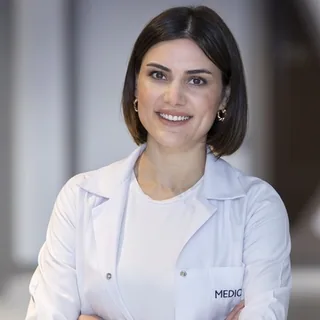
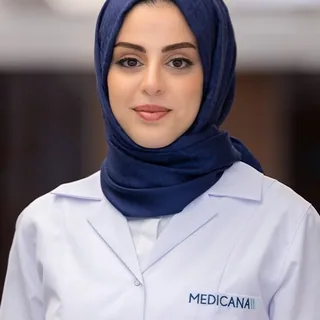
Ayça Sena Yılmaz
M.D. Specialist · Nutrition and Dietetics
Medicana Ataköy Hospital · Bakırköy, İstanbul
- Experience
- 7 years
- Experience
- 10 years
- Experience
- 11 years
- Experience
- 6 years
Safiye Keskin
M.D. Specialist · Nutrition and Dietetics
Liv Hospital Vadi İstanbul · Sarıyer, İstanbul
- Experience
- 21 years
- Clinical interests
- Medical nutrition therapy and carbohydrate counting in diabetes, Medical nutrition therapy in children and adolescents, Medical nutrition therapy during pregnancy and lactation, Nutrition in body weight management
- Memberships
- Member of Turkish Dietetic Association
- Member of Turkish Diabetes Dietician Association
- Experience
- 11 years
- Experience
- 18 years
- Experience
- 12 years
- Experience
- 11 years
- Experience
- 20 years
Where they practise
The hospitals and clinics where the most doctors on this list work.

Opened in 2023 as Medicana's 15th hospital: 48 branches, Da Vinci robotic surgery, CyberKnife, PET/CT and an International Patient Center.
Medicana Ataköy Hospital opened in 2023 as the 15th hospital of the Medicana Healthcare Group, a hospital group founded in 1992.
The official record lists 700 personnel and 48 medical branches at this private hospital.
- Founded
- 2023
- Doctors listed
- 64
- Group or operator
- Part of Medicana Healthcare Group
- Technology
- SPECT-CT, PET/CT, Da Vinci robotic surgery system, CyberKnife, Single-dose radiotherapy, Angiography, Endoscopic ultrasound (EUS), Ultrasonography
- For international patients
- Holds health tourism authorization certificate no. ST-3985
- International Patient Center
- Transfer service
- Translation service
- and 1 more
- Languages
- Arabic, Bosnian, English, French, Georgian, German, Russian, Uzbek
- Accreditations
- AACI, ISO 9001
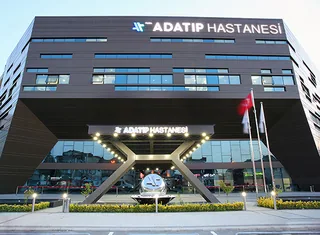
Hospital in Sakarya founded in 1995 with radiation and medical oncology, cardiovascular surgery, an obesity surgery unit, IVF and ISO 9001 certificate.
Founded in 1995, the hospital became part of the group of companies owned by businessman Orhan Kocabıyık in June 2014.
The hospital states that it is the first and largest hospital in Sakarya and the Eastern Marmara Region.
- Founded
- 1995
- Doctors listed
- 68
- Group or operator
- Part of the group of companies owned by businessman Orhan Kocabıyık since June 2014
- Technology
- Angiography, Radiation Oncology Unit equipped with a renewed radiotherapy device
- For international patients
- Transfer service
- Translation service
- Accommodation consultancy service
- Exchange office
- Languages
- Arabic, English, French, German, Russian
- Accreditations
- ISO 10002, ISO 9001

Hospital in Kepez, Antalya since 2011: 75 beds, 30 intensive care beds and a level 3 neonatal unit with 16 incubators.
Intensive care takes up a large share of this hospital's capacity: of 75 beds in total, 30 are intensive care beds.
The hospital states that it has served the Kepez area of Antalya since 2011.
- Founded
- 2011
- Doctors listed
- 29
- Capacity
- 75 beds in total
- Group or operator
- The organization provides services at two separate locations in Antalya (hospital and medical center)
- Technology
- Direct X-ray, mammography and ultrasound imaging, Ultrasonography
- For international patients
- Staff who speak foreign languages or sign language can be called in when needed in the emergency department
- Health tourism authorization number ST-0138
- Languages
- Arabic, English, German, Portuguese, Russian, Ukrainian

Ankara hospital founded in 1975, part of Güven Healthcare Group, with JCI and Planetree Gold accreditation and organ and bone marrow transplant centers.
Joint Commission International (JCI) first accredited the hospital in 2008 and accredited it again in 2011, 2014, 2017, 2020 and 2023.
Founded in 1975, Ankara Güven Hospital belongs to Güven Sağlık Grubu, also known as Güven Healthcare Group.
- Founded
- 1975
- Doctors listed
- 133
- Group or operator
- Part of Güven Sağlık Grubu (Güven Healthcare Group)
- Technology
- Force CT, SPECT/CT, PET/CT, 3 Tesla MRI, Intraoperative 3 Tesla MRI, TrueBeam radiotherapy system, Single-dose radiotherapy, 3D tomosynthesis mammography, and 4 more
- For international patients
- Transfer service
- Translation service
- Accommodation consultancy service
- Languages
- Albanian, Arabic, Bosnian, Bulgarian, English, French, Georgian, Italian, Russian, Somali, Uzbek
- Accreditations
- JCI
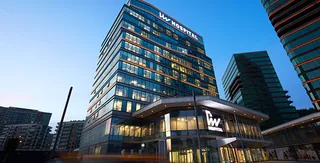
Liv Hospital Group's sixth hospital, opened 2021: robotic surgery with Da Vinci, pediatric heart and cancer surgery, IVF and 3 Tesla MRI.
The Liv Hospital Group describes Liv Hospital Vadi İstanbul as the sixth hospital in a journey that, it says, began in 2013.
The official record gives 2021 as the founding year of this privately owned hospital.
- Founded
- 2021
- Doctors listed
- 85
- Group or operator
- Liv Hospital Group
- Technology
- Da Vinci robotic surgery system, Intraoperative 3 Tesla MRI, 3 Tesla MR, PET/CT, SPECT CT, Force CT, CyberKnife, TrueBeam, and 3 more
- For international patients
- Transfer service
- Translation service
- Accommodation consultancy service
- Languages
- Albanian, Arabic, Bosnian, Bulgarian, Chinese, English, French, Georgian, German, Italian, Persian, Romanian, Russian, Serbian, Somali, Spanish, Ukrainian, Uzbek
- Accreditations
- ISO 9001
Questions about this list
How many dietitians in Türkiye are listed?
13 dietitians in Türkiye are listed on Medicaltour, practising at 12 private hospitals and clinics that hold the Ministry of Health's health-tourism authorization.
Who are the most experienced dietitians in Türkiye?
By the years of experience reported on HealthTürkiye: Safiye Keskin (21 years), Evrim Güngör (20 years) and Betül Merd (18 years).
Where do dietitians in Türkiye practise?
They practise at 12 private hospitals and clinics that hold the Ministry of Health's health-tourism authorization. The most doctors on this list work at Medicana Ataköy Hospital (2), Adatıp Hospital (1) and Akdeniz Şifa Hospital (1).
Which languages do dietitians in Türkiye speak?
Languages stated for individual doctors on their clinics' websites: English (1).
Which cities have the most dietitians in Türkiye?
By the city on the Ministry of Health's list: Istanbul (4), Ankara (2), Bursa (2), Antalya (1), Izmir (1), Kayseri (1).
About this specialty
In EnglishNutrition and dietetics looks at how food and nutrients affect health, and how eating patterns can be adjusted to suit different needs.
What this specialty covers
Nutrition and dietetics deals with how what people eat affects their health, since a poor diet is a major driver of disease and disability. A well-chosen diet can help guard against malnutrition and against long-term conditions, including cancer, stroke, heart disease and diabetes. Nutrients give the body what it needs to grow, repair tissue and stay well.1,2
Nutrients are the substances the body draws from food: water, proteins, fats, carbohydrates, vitamins and minerals. Carbohydrates are the main fuel, proteins form tissues such as muscle along with hormones and enzymes, and fat is needed for cells to work properly. Vitamins and minerals, called micronutrients, number about 30, made up of 13 vitamins and 16 minerals. Shortfalls in them can contribute to anaemia, scurvy, cognitive impairment and neural tube defects, which are birth defects of the brain and spine.1,2
A healthy diet is generally built on four principles: adequacy, balance, moderation and diversity. Food also has to be safe, meaning free of microbial and chemical contamination.1
Who it is usually for
Nutritional needs shift with age, sex, activity level, health conditions and personal health goals. No single eating plan or calorie target suits every person, and the right mix depends on lifestyle and physical activity.1,2
Teenagers, athletes and people building muscle may take in more than 15% of their energy as protein. Pregnancy raises requirements of iron, folic acid, calcium and vitamin D. Good nutrition in early childhood supports healthy growth and the development of thinking skills. Diet can also form part of treatment; for example, diets very low or low in carbohydrate are used in managing some conditions.1,3
What a visit usually involves
A person can discuss a suitable eating pattern with a health care provider, who may refer them to a dietitian for more specialised advice. In pregnancy, the provider usually sets a weight gain goal that takes into account weight before pregnancy, age and how quickly weight is being gained. Practical steps often discussed include planning meals before going shopping and checking food labels.2,3
Treatment and follow-up
For most people, unrefined carbohydrates are suggested to supply around 45–75% of daily energy, while protein at 10–15% is generally enough for adults. Free sugars should stay under 10% of daily energy, and cutting them is meant to happen without switching to non-sugar sweeteners. Saturated fat is advised at no more than 10% of energy, and trans fat at no more than 1%. Adults are advised to keep salt under 5 g a day, equal to 2 g of sodium. Adults may benefit from getting 90 mmol (3510 mg) of potassium or more each day. From the age of 10, the aim is at least 400 g of fruit and vegetables and at least 25 g of fibre each day.1
Steaming or boiling food rather than frying it can lower fat intake. Eating well does not mean following a strict diet, and supplements are meant to add to a healthy diet rather than stand in for it. For infants, breastfeeding alone is recommended for the first 6 months. In the second trimester of pregnancy, around 340 extra calories are usually needed, and 600 mcg of folic acid a day is needed during pregnancy and breastfeeding.1,2,3
Risks to discuss with your doctor
High salt intake is linked to raised blood pressure, which can in turn lead to cardiovascular disease, meaning disease of the heart and blood vessels. Diets heavy in highly processed foods are linked to poorer health, and trans fats made industrially should be avoided. Very high protein intake can strain the body, especially the kidneys.1
Supplements carry their own risks: too much can be harmful, and an excess of vitamin A can cause birth defects. During pregnancy, no amount of alcohol is known to be safe, and large amounts of caffeine may harm the baby.3
Questions to ask a clinic
- Which vitamin or mineral supplements, if any, would you recommend for me?3
- How much weight gain would be healthy for me during pregnancy?3
- Should I have any caffeine while pregnant?3
- How can I find out how much salt I am currently eating?1
- Can the eating plan take my food preferences, cultural traditions and budget into account?2
- Would you refer me to a dietitian for more specialised advice?2
Other specialties
- Dentists in Türkiye (4.241)
- Internal medicine specialists in Türkiye (1.314)
- Gynecologists and obstetricians in Türkiye (1.170)
- Pediatricians in Türkiye (914)
- ENT specialists in Türkiye (892)
- Ophthalmologists in Türkiye (821)
- General surgeons in Türkiye (806)
- Plastic surgeons in Türkiye (767)
- Orthopedic surgeons in Türkiye (699)
- Anesthesiologists in Türkiye (674)
- Oral and maxillofacial surgeons in Türkiye (605)
- Radiologists in Türkiye (528)
Specialty is the department each doctor is registered in on HealthTürkiye, the official health-tourism portal.