Cardiologists in Türkiye
523 cardiologists in Türkiye are listed on Medicaltour, practising at 272 private hospitals and clinics that hold the Ministry of Health's health-tourism authorization.
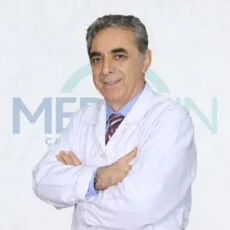
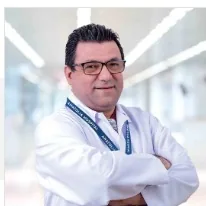
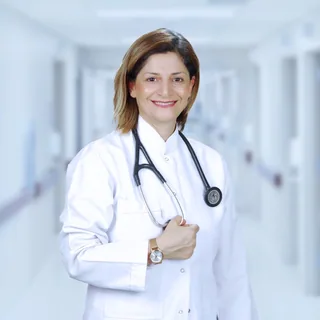
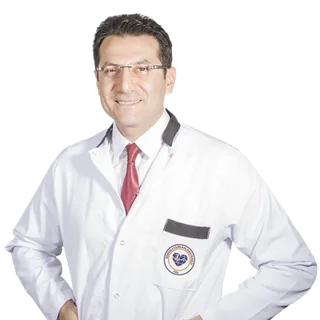
131 hold the title of professor. 77 are associate professors. 223 report 20 or more years of experience. 8 have education or training abroad stated on their clinic's website. Languages stated: English (33), German (2), Spanish (1). By city: Istanbul (187), Ankara (52), Izmir (49), Antalya (27), Adana (22), Bursa (17).
- Experience
- 22 years
- Experience
- 26 years
- Education
- Graduated from Istanbul University Cerrahpaşa Faculty of Medicine in 1978
- Training
- Cardiology specialization at Haseki Cardiology Institute (1983–1992)
- Treatments
- Aortic Valve Replacement (AVR), Cardiac Catheterization, Closure of ASD/VSD/PDA, Coronary Angiogram, Coronary Angioplasty and Stent, CT Coronary Angiogram, and 14 more
Şahin Kaplan
Professor · Cardiology
Altınbaş University Medical Park Bahçelievler Hospital · Bahçelievler, İstanbul
- Education
- Graduated from Gazi University (Medicine) in 1998
- Training
- Specialty training in Cardiology at Karadeniz Technical University (2004)
- Abroad assignment in Cardiology at Royal Brompton Hospital, Imperial College, London, UK (2005-2007)
- Clinical interests
- Angiography from the wrist, Heart rhythm disorders, Stenting of the carotid artery, Pacemaker, Hypertension, Heart valve diseases
- Memberships
- Member of Turkish Society of Cardiology
- Member of European Society of Cardiology
- Member of European Society of Invasive Cardiology
- Experience
- 23 years
- Education
- Graduated from Dokuz Eylül University School of Medicine
- Training
- Medical residency at Istanbul University Cerrahpaşa School of Medicine
- Clinical interests
- Preventive Cardiology, Invasive Cardiology, Cardiac Imaging
- Memberships
- Member of Turkish Society of Cardiology
- Experience
- 30 years
- Treatments
- Angioplasty, Aortic Valve Replacement (AVR), Cardiac Catheterization, Closure of ASD/VSD/PDA, Coronary Angiogram, Coronary Angioplasty and Stent, and 15 more
- Experience
- 19 years
- Clinical interests
- Complex coronary interventions, Chronic total occlusion (CTO) interventions, Peripheral vascular disease, Transcatheter aortic valve implantation, Transesophageal echocardiography, Holter and treadmill testing, and 4 more
- Treatments
- Electrophysiology Studies (EPS)
- Experience
- 17 years
- Experience
- 22 years
- Education
- Graduated from Istanbul University Faculty of Medicine in 1998
- Training
- Specialty training in Cardiology at Dr. Siyami Ersek Thoracic and Cardiovascular Surgery Center (1999-2004)
- Clinical interests
- Cardiac CTA, Cardiac MRI, Transthoracic echocardiography, Transesophageal echocardiography, Stress echocardiography, Advanced stage heart failure, and 2 more
- Memberships
- Member of European Society of Cardiology
- Member of Turkish Society of Cardiology Sports Cardiology Subgroup
- Member of American College of Cardiology
- and 1 more
- Education
- Graduated from Hacettepe University Faculty of Medicine in 1997
- Training
- Specialty training in Cardiology at Ankara University (2004)
- Languages
- English
- Experience
- 33 years
- Experience
- 29 years
- Experience
- 21 years
- Education
- Graduated from Istanbul University Cerrahpaşa Faculty of Medicine in 2005
- Training
- Specialty training in Cardiology at Kartal Koşuyolu High Specialization Training and Research Hospital (2010)
- Memberships
- Member of Turkish Society of Cardiology
- Member of European Society of Cardiology
- Member of Turkish Medical Association
- Languages
- English
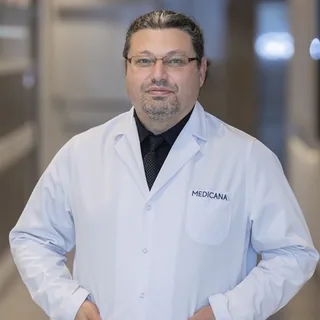
Gültekin Faik Hobikoğlu
Professor · Cardiology
Medicana Bahçelievler Hospital · Bahçelievler, İstanbul
- Experience
- 32 years
- Experience
- 41 years
- Experience
- 32 years
- Education
- Graduated from Gazi University Faculty of Medicine in 1993
- Training
- Professional education in catheterization laboratory at Harvard Medical School, Massachusetts General Hospital, USA (2007)
- Clinical interests
- Interventional Cardiology, PTCA, Coronary Stent, Cardiac Catheterization, Cardiac Pacemaker, ICD Implantation, and 4 more
- Memberships
- Member of Turkish Association of Cardiology
- Member of European Association of Cardiology
- Member of Turkish Medical Association
- Languages
- English
- Experience
- 28 years
- Experience
- 17 years
- Experience
- 30 years
- Education
- Graduated from Gazi University Faculty of Medicine in 1996
- Training
- Specialty training in Cardiology at Fırat University
- Clinical interests
- Cardiovascular diseases, hypertension, heart failure, angiography
- Languages
- English
- Experience
- 36 years
- Experience
- 29 years
- Experience
- 41 years
- Education
- Karadeniz Technical University Faculty of Medicine
- Clinical interests
- Coronary artery disease, hypertension, heart rhythm disorders, heart failure
- Experience
- 8 years
Zuhal Arıtürk Atılgan
Associate Professor · Cardiology
Aktif International Üsküdar Hospital · Üsküdar, İstanbul
- Experience
- 25 years
Yusuf İzzettin Alihanoğlu
Associate Professor · Cardiology
Denizli Cerrahi Hospital · Pamukkale, Denizli
- Experience
- 3 years
- Experience
- 9 years
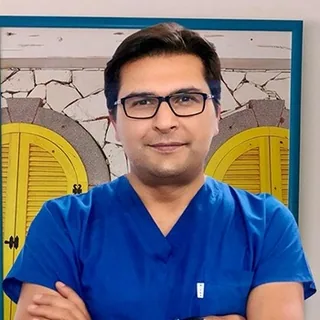
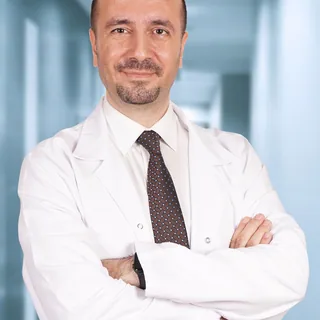
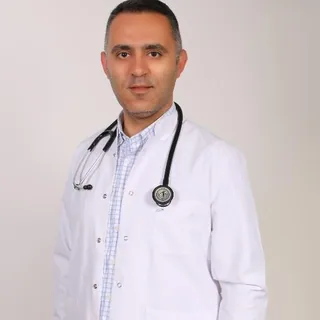
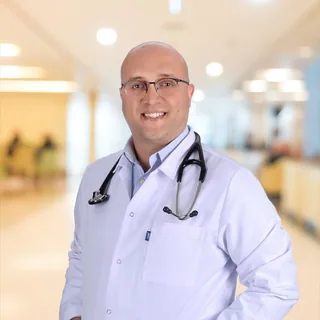
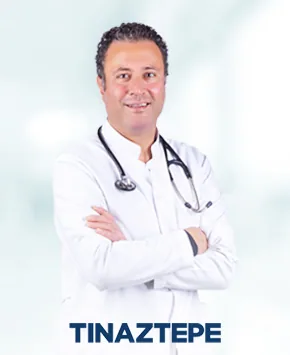
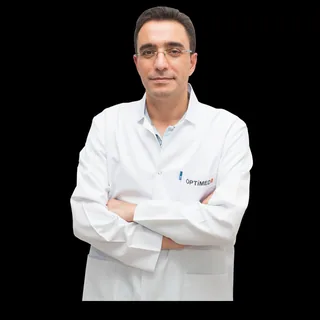
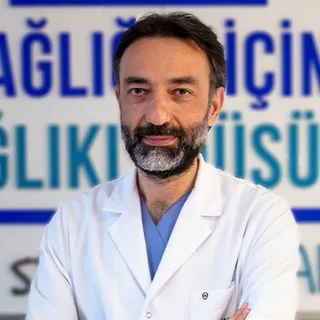
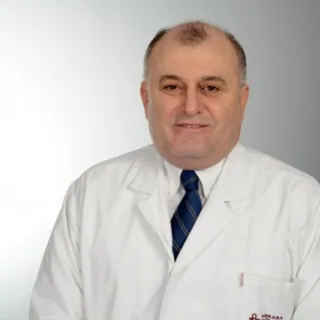
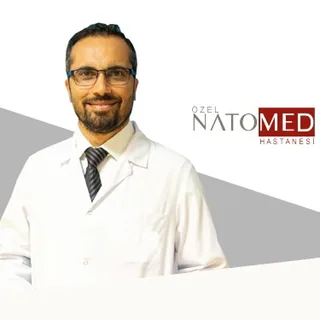
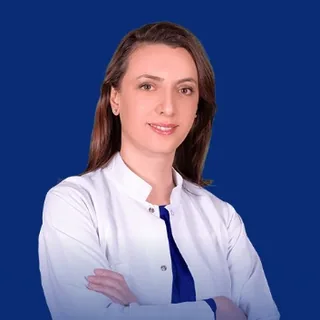
Where they practise
The hospitals and clinics where the most doctors on this list work.
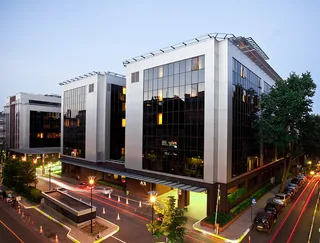
JCI-accredited Nişantaşı hospital in VKV Health Institutions: oncology, IVF, obesity surgery, Da Vinci robotic surgery and international services.
The hospital is part of VKV Health Institutions, the group that also includes Koç University Hospital and American Medical Center.
The official record lists 1995 as its foundation year, 185 doctors, 1862 personnel and 48 branches.
- Founded
- 1995
- Doctors listed
- 172
- Group or operator
- Part of VKV Health Institutions (with Koç University Hospital and American Medical Center)
- Technology
- Force CT, SPECT/CT, PET/CT, 3 Tesla MRI, Da Vinci robotic surgery system, TrueBeam radiotherapy system, Single-dose radiotherapy, 3D tomosynthesis mammography, and 2 more
- For international patients
- Translation service
- Transfer service
- Accommodation consultancy service
- Travel insurance consultancy service
- and 1 more
- Languages
- Albanian, Arabic, Bosnian, Bulgarian, English, French, Georgian, Persian, Romanian, Russian, Serbian, Ukrainian, Uzbek
- Accreditations
- ISO 27001, JCI
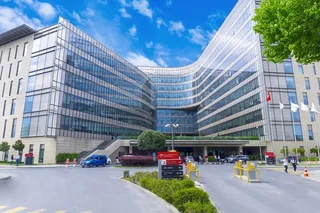
Koç University Hospital
Universitätsklinikum (Stiftung) · Zeytinburnu, İstanbul
11 doctors on this list
Foundation university hospital opened in 2014, part of VKV Health Institutions, with transplant, cancer, IVF and robotic surgery centers.
Koç University Hospital opened in 2014 as a foundation university hospital.
It belongs to VKV Health Institutions, the Vehbi Koç Foundation health group, which comprises 3 facilities.
- Founded
- 2014
- Doctors listed
- 221
- Group or operator
- Part of VKV Health Institutions (Vehbi Koç Foundation)
- Technology
- Da Vinci robotic surgery system, PET/CT, SPECT/CT, 3 Tesla MRI, Angiography, Endoscopic ultrasound (EUS)
- For international patients
- Transfer service
- Translation service
- Languages
- Albanian, Arabic, Bosnian, Bulgarian, English, French, German, Greek, Persian, Romanian, Russian, Serbian, Ukrainian, Uzbek
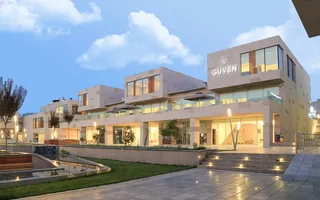
Ankara hospital founded in 1975, part of Güven Healthcare Group, with JCI and Planetree Gold accreditation and organ and bone marrow transplant centers.
Joint Commission International (JCI) first accredited the hospital in 2008 and accredited it again in 2011, 2014, 2017, 2020 and 2023.
Founded in 1975, Ankara Güven Hospital belongs to Güven Sağlık Grubu, also known as Güven Healthcare Group.
- Founded
- 1975
- Doctors listed
- 133
- Group or operator
- Part of Güven Sağlık Grubu (Güven Healthcare Group)
- Technology
- Force CT, SPECT/CT, PET/CT, 3 Tesla MRI, Intraoperative 3 Tesla MRI, TrueBeam radiotherapy system, Single-dose radiotherapy, 3D tomosynthesis mammography, and 4 more
- For international patients
- Transfer service
- Translation service
- Accommodation consultancy service
- Languages
- Albanian, Arabic, Bosnian, Bulgarian, English, French, Georgian, Italian, Russian, Somali, Uzbek
- Accreditations
- JCI
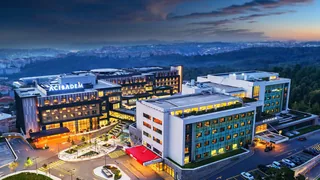
JCI-accredited Acıbadem Maslak Hospital, founded 2009: 231 beds, 75 chemotherapy rooms, robotic surgery, IVF center, NICU and Health Point Center.
Acıbadem Maslak Hospital was founded in 2009 within Acıbadem Healthcare Group, and the hospital states that a new building of 60 thousand m2 was added in an enlargement project finalized in 2018.
It lists 231 patient beds, 51 intensive care beds, 20 general operating rooms and 3 IVF operating rooms.
- Founded
- 2009
- Doctors listed
- 263
- Capacity
- 231 patient beds
- 20 general operating rooms and 3 IVF operating rooms
- Group or operator
- Part of Acıbadem Healthcare Group
- Technology
- TrueBeam, da Vinci, EOS, whole-body MRI, Trilogy, intraoperative radiotherapy, PET-CT, MR Linac and Rapid Arc, Force CT, SPECT-CT, 3 Tesla MRI, Intraoperative 3 Tesla MRI, Single-dose radiotherapy, 3D tomosynthesis mammography, and 2 more
- For international patients
- Health tourism authorization certificate number ST-0292
- Health Point Center for international patients follows their diagnostic and treatment processes
- Languages
- Albanian, Arabic, Bulgarian, English, French, Georgian, Russian, Serbian
- Accreditations
- ISO 9001, JCI

JCI-accredited Acıbadem Healthcare Group hospital opened in 2017, with bone marrow transplant, oncology, Gamma Knife Icon and Health Point services.
Acıbadem Altunizade Hospital opened in March 2017 as the 21st hospital of the Acıbadem Healthcare Group.
The building has been awarded a LEED Gold certificate as a green building.
- Founded
- 2017
- Doctors listed
- 199
- Capacity
- 350 beds
- Group or operator
- Acıbadem Healthcare Group
- Technology
- Triple hybrid operating theatre system with 3 Tesla MRI, 128-slice sliding CT and robotic-arm angiography, Intraoperative 3 Tesla MRI, Da Vinci robotic surgery system, Tomotherapy HDA, TrueBeam linear accelerator, VitalBeam and Gamma Knife Icon in the oncology unit, PET/CT, SPECT/CT, and 3 more
- For international patients
- Holds health tourism authorization certificate no. ST-0413
- International patient unit 'Health Point' serving in 16 languages
- Awards
- LEED Gold certified green building
- Languages
- Albanian, Arabic, Bosnian, Bulgarian, English, French, Georgian, Persian, Romanian, Russian, Serbian, Somali, Ukrainian, Uzbek
- Accreditations
- JCI
Questions about this list
How many cardiologists in Türkiye are listed?
523 cardiologists in Türkiye are listed on Medicaltour, practising at 272 private hospitals and clinics that hold the Ministry of Health's health-tourism authorization.
Who are the most experienced cardiologists in Türkiye?
By the years of experience reported on HealthTürkiye: Cemal Lüleci (52 years), Muharrem Coşkun (49 years) and Cahide Soydaş Çınar (48 years).
Where do cardiologists in Türkiye practise?
They practise at 272 private hospitals and clinics that hold the Ministry of Health's health-tourism authorization. The most doctors on this list work at VKV American Hospital (12), Koç University Hospital (11) and Ankara Güven Hospital (10).
How many cardiologists in Türkiye are professors?
Of the 523 listed, 131 hold the title of professor and 77 are associate professors, as registered on HealthTürkiye.
How many cardiologists in Türkiye trained abroad?
8 have education or training abroad stated on their clinic's website. Countries stated: United States (3), Belgium (1), United Kingdom (1), Italy (1), Japan (1).
Which languages do cardiologists in Türkiye speak?
Languages stated for individual doctors on their clinics' websites: English (33), German (2), Spanish (1).
Which cities have the most cardiologists in Türkiye?
By the city on the Ministry of Health's list: Istanbul (187), Ankara (52), Izmir (49), Antalya (27), Adana (22), Bursa (17).
About this specialty
In EnglishCardiology deals with diseases of the heart and blood vessels.
What this specialty covers
A cardiologist is a doctor who focuses on heart disease, a broad label for many different heart problems. These problems belong to a wider group called cardiovascular diseases, which affect the heart and blood vessels and cause more deaths worldwide than any other cause.1,2
Coronary artery disease is the most frequent form, and it affects the vessels that feed the heart muscle. Arrhythmia is a problem with the speed or rhythm of the heartbeat, and heart failure means the heart cannot pump as much blood as the body requires. Other conditions involve the valves or the heart muscle, and disease of the muscle is called cardiomyopathy.1,2
High blood pressure that lasts for years can cause hypertensive heart disease. Congenital heart disease is a defect present from birth, such as a hole in the heart. Rheumatic heart disease is valve and muscle damage left by rheumatic fever, which streptococcal bacteria cause.2,3,4
Who it is usually for
The chance of heart disease grows with age, with heart disease in close relatives at a young age, and with other medical conditions. Key lifestyle factors are a poor diet, too little activity, tobacco use and harmful drinking. Heart disease and raised blood pressure may give no warning signs at first, so a yearly blood pressure check is generally advised for most adults aged 18 or over. Some people born with a heart defect only notice symptoms as teenagers or adults.1,2,3,4
What a visit usually involves
A visit usually starts with questions about current symptoms and about personal and family health history, followed by a physical examination. Heart and blood tests are likely, and a stethoscope can pick up a heart murmur, an unusual sound in the heartbeat. An electrocardiogram records the heart's electrical signals, and pulse oximetry checks the oxygen level in the blood. Chest X-rays, an echocardiogram or MRI may be used to look at the heart and nearby vessels, while angiography follows blood flow with a dye visible on scanners.1,4
Treatment and follow-up
Treatment depends on the type of heart disease, how severe the symptoms are and any other health conditions. Some people may only need regular check-ups, with treatment added if symptoms worsen. Finding the disease early lets counselling and medicines start sooner.1,2,4
Options can include heart-healthy changes to daily habits and cardiac rehabilitation. Basic medicines include beta-blockers, calcium channel blockers and statins, while anti-arrhythmics steady an irregular heartbeat and diuretics reduce fluid that collects in the body. Medicines for high blood pressure, diabetes and high blood lipids also lower cardiovascular risk.1,2,4
In balloon angioplasty, a small balloon-like device is passed along an artery to open a blockage. Surgery can include coronary artery bypass and valve repair or replacement, and devices such as pacemakers, prosthetic valves and patches for holes in the heart may be used.2
Risks to discuss with your doctor
Poorly controlled blood pressure can gradually weaken the heart muscle and may lead to heart failure, so blood pressure medicines should only be stopped or changed after speaking with your doctor. Heart disease is sometimes first found after a complication such as a heart attack. Pain or discomfort in the middle of the chest can signal a heart attack, and signs of a heart attack or stroke need medical help straight away.1,2,3
Endocarditis is an uncommon heart infection, and gum infections can cause complications in congenital heart disease. Quitting tobacco, eating less salt and more fruit and vegetables, staying active and avoiding harmful alcohol use have been shown to lower cardiovascular risk.2,4
Questions to ask a clinic
- What level of physical activity would be safe for me?4
- How often should my blood pressure be checked, given my readings and other conditions?3
- Who in the care team can help if my heart condition is affecting my mood or mental health?4
- What should I discuss with the team about congenital heart disease and a current or planned pregnancy?4
- Which heart tests and blood tests do you expect to run at my first visit?1
Other specialties
- Dentists in Türkiye (4.241)
- Internal medicine specialists in Türkiye (1.314)
- Gynecologists and obstetricians in Türkiye (1.170)
- Pediatricians in Türkiye (914)
- ENT specialists in Türkiye (892)
- Ophthalmologists in Türkiye (821)
- General surgeons in Türkiye (806)
- Plastic surgeons in Türkiye (767)
- Orthopedic surgeons in Türkiye (699)
- Anesthesiologists in Türkiye (674)
- Oral and maxillofacial surgeons in Türkiye (605)
- Radiologists in Türkiye (528)
Specialty is the department each doctor is registered in on HealthTürkiye, the official health-tourism portal.