Perinatologists in Türkiye
21 perinatologists in Türkiye are listed on Medicaltour, practising at 18 private hospitals and clinics that hold the Ministry of Health's health-tourism authorization.
8 hold the title of professor. 6 are associate professors. 8 report 20 or more years of experience. 2 have education or training abroad stated on their clinic's website. Languages stated: English (1). By city: Istanbul (15), Antalya (2), Ankara (1), Gaziantep (1), Izmir (1), Kocaeli (1).
- Education
- Graduated from Istanbul University Faculty of Medicine in 2000
- Training
- Specialty training in Obstetrics and Gynecology at Taksim Training and Research Hospital (2004-2009)
- Maternal Fetal Medicine Fellowship at Kanuni Sultan Süleyman Training and Research Hospital, Istanbul, Turkey (2014-2017)
- Clinical interests
- First trimester fetal screening, Second trimester fetal screening, Fetal echocardiography, High risk pregnancy follow up, Cerclage operation, Placenta accreta, increta and percreta surgery, and 4 more
- Experience
- 21 years
- Experience
- 35 years
- Clinical interests
- Perinatal medicine, High-risk pregnancies, Detailed ultrasound, Prenatal diagnosis, Amniocentesis, Chorionic villus sampling (CVS), and 1 more
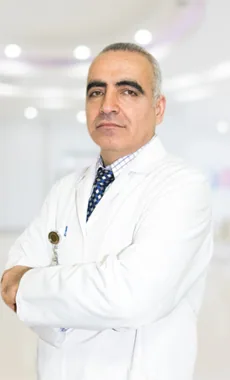
Mehmet Aytaç Yüksel
Professor · Perinatology
Acıbadem University Atakent Hospital · Küçükçekmece, İstanbul
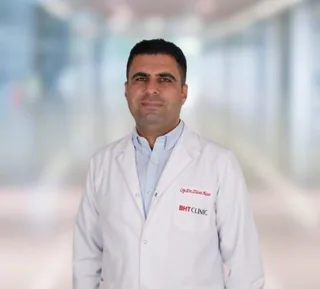
Murat Aykut Özek
Assistant Professor · Perinatology
Başkent University Alanya Hospital · Alanya, Antalya
- Experience
- 18 years
- Education
- Graduated from Hacettepe University Faculty of Medicine in 2008
- Training
- Specialty training in Obstetrics and Gynecology at Hacettepe University (2008-2013)
- Subspecialty training in Maternal-Fetal Medicine (Perinatology) at Gazi University, Ankara, Turkey (2014-2017)
- Master's degree in Fetal Medicine at Paris Descartes University, Paris, France (2019-2020)
- Clinical interests
- Pregnancy follow-up and delivery, Detailed fetal ultrasonography, Invasive procedures during pregnancy, Fetal screening tests, Fetal anomalies, Fetal developmental disorders, and 1 more
- Memberships
- Member of Turkish Maternal Fetal Medicine and Perinatology Association
- Member of Perinatology Specialists Association
- Member of The South East European Society of Perinatal Medicine
- and 2 more
- Experience
- 27 years
- Experience
- 26 years
- Education
- Graduated from Ege University Faculty of Medicine
- Training
- Specialty training in Obstetrics and Gynecology at Istanbul University Faculty of Medicine
- Training in fetal physiology at Haukeland University Hospital, Bergen, Norway (2020)
- Training in advanced operative vaginal delivery at Haukeland University Hospital, Bergen, Norway (2022)
- Clinical interests
- High-risk pregnancies, Perinatology, Detailed fetal ultrasound, High-risk and complicated deliveries
- Publications
- More than 100 domestic and international publications
- Experience
- 6 years
- Education
- Graduated from Ankara University Faculty of Medicine in 2005
- Training
- Specialty training in Obstetrics and Gynecology at Ankara University Faculty of Medicine (2005-2010)
- Subspecialty training in Perinatology at Ankara University Faculty of Medicine (2014-2017)
- Clinical interests
- Gynecology and Obstetrics, Perinatology
- Experience
- 26 years
- Experience
- 40 years
- Experience
- 16 years
- Experience
- 38 years
- Training
- Specialty training at Erciyes University Faculty of Medicine (1993)
- Clinical interests
- Fetal echocardiography, Fetal genetic sonography, Fetal neurosonography, Fetal targeted ultrasonography, Maternal systemic diseases and fetus
- Memberships
- Member of Turkish Society of Obstetrics and Gynecology (TJOD)
- Member of Maternal Fetal Medicine and Perinatology Society of Türkiye
- Member of International Society of Ultrasound in Obstetrics and Gynecology (ISUOG)
- Languages
- English
Betül Yakıştıran
Associate Professor · Perinatology
VM Medical Park Kocaeli Hospital · Başiskele, Kocaeli
- Experience
- 14 years
- Experience
- 23 years
Where they practise
The hospitals and clinics where the most doctors on this list work.
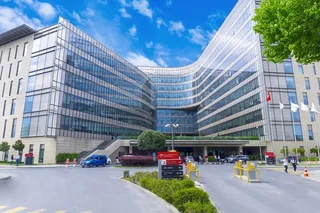
Foundation university hospital opened in 2014, part of VKV Health Institutions, with transplant, cancer, IVF and robotic surgery centers.
Koç University Hospital opened in 2014 as a foundation university hospital.
It belongs to VKV Health Institutions, the Vehbi Koç Foundation health group, which comprises 3 facilities.
- Founded
- 2014
- Doctors listed
- 221
- Group or operator
- Part of VKV Health Institutions (Vehbi Koç Foundation)
- Technology
- Da Vinci robotic surgery system, PET/CT, SPECT/CT, 3 Tesla MRI, Angiography, Endoscopic ultrasound (EUS)
- For international patients
- Transfer service
- Translation service
- Languages
- Albanian, Arabic, Bosnian, Bulgarian, English, French, German, Greek, Persian, Romanian, Russian, Serbian, Ukrainian, Uzbek

JCI-accredited Acıbadem Maslak Hospital, founded 2009: 231 beds, 75 chemotherapy rooms, robotic surgery, IVF center, NICU and Health Point Center.
The Perinatology department provides follow-up and treatment for high-risk pregnancies.
- Founded
- 2009
- Doctors listed
- 263
- Capacity
- 231 patient beds
- 20 general operating rooms and 3 IVF operating rooms
- Group or operator
- Part of Acıbadem Healthcare Group
- Technology
- TrueBeam, da Vinci, EOS, whole-body MRI, Trilogy, intraoperative radiotherapy, PET-CT, MR Linac and Rapid Arc, Force CT, SPECT-CT, 3 Tesla MRI, Intraoperative 3 Tesla MRI, Single-dose radiotherapy, 3D tomosynthesis mammography, and 2 more
- For international patients
- Health tourism authorization certificate number ST-0292
- Health Point Center for international patients follows their diagnostic and treatment processes
- Languages
- Albanian, Arabic, Bulgarian, English, French, Georgian, Russian, Serbian
- Accreditations
- ISO 9001, JCI

Acıbadem hospital opened in 2022 with 295 beds, a separate pediatric building, 34 chemotherapy units, Ethos and TrueBeam radiotherapy and IVF services.
Women's health services include gynecology and obstetrics, IVF, perinatology and gynecologic oncology.
- Founded
- 2022
- Doctors listed
- 36
- Capacity
- 295
- 10 operating rooms, plus 1 IVF operating room, 1 minor surgery room, 3 endoscopy/colonoscopy rooms and 2 angiography intervention rooms
- Group or operator
- Acıbadem Healthcare Group
- Technology
- Smart building technologies and a Command Center system, Ethos and TrueBeam radiotherapy devices in radiation oncology, Two 3 Tesla and 1.5 Tesla MRI devices, Two low-dose CT scanners, PET-CT and Force CT, EUS, EBUS and Fibroscan, 3D tomosynthesis digital mammography, 2-plane digital angiography, and 1 more
- Languages
- Albanian, Arabic, Bosnian, English, French, Georgian, Russian, Serbian

Acıbadem Healthcare Group hospital in Kozyatağı, Kadıköy: 75 beds, IVF and Reproductive Health Center, perinatology, neonatal intensive care.
Perinatology and high-risk pregnancy care is offered, and the hospital has a neonatal intensive care unit.
- Doctors listed
- 27
- Capacity
- 75 beds
- 4 operating rooms
- Group or operator
- Acıbadem Healthcare Group
- Technology
- 3 Tesla MRI, Ultrasonography, ECG
- Languages
- Bulgarian, English, Romanian, Russian

JCI-accredited university hospital in İstanbul: 262 beds, transplant and oncology centers, robotic surgery and a Health Point international unit.
Obstetrics and gynecology works alongside perinatology and an IVF and Reproductive Health Center.
- Founded
- 2013
- Doctors listed
- 57
- Capacity
- 262 beds
- 12 operating rooms
- Group or operator
- Part of Acıbadem Healthcare Group
- Technology
- Da Vinci robotic surgery system, Radiation oncology: TrueBeam, VitalBeam and Radixact, PET-CT and SPECT-CT for diagnosis and treatment planning, 3 Tesla and 1,5 Tesla MRI, Low-dose CT, 3D tomosynthesis digital mammography, Digital angiography, Endoscopic ultrasound (EUS)
- For international patients
- Holds a health tourism authorization certificate (no. ST-0562)
- Health Point unit serving international patients in 16 languages
- Transfer service
- Translation service
- Awards
- Baby-Friendly Hospital title
- Neonatal Intensive Care Friendly Hospital title
- Languages
- Albanian, Arabic, Bosnian, Bulgarian, English, French, Georgian, Romanian, Russian, Serbian
- Accreditations
- JCI
Questions about this list
How many perinatologists in Türkiye are listed?
21 perinatologists in Türkiye are listed on Medicaltour, practising at 18 private hospitals and clinics that hold the Ministry of Health's health-tourism authorization.
Who are the most experienced perinatologists in Türkiye?
By the years of experience reported on HealthTürkiye: Necip Cihangir Yılanlıoğlu (40 years), Mustafa Başbuğ (38 years) and Mehmet Aygün (35 years).
Where do perinatologists in Türkiye practise?
They practise at 18 private hospitals and clinics that hold the Ministry of Health's health-tourism authorization. The most doctors on this list work at Koç University Hospital (3), Acıbadem Maslak Hospital (2) and Acıbadem Ataşehir Hospital (1).
How many perinatologists in Türkiye are professors?
Of the 21 listed, 8 hold the title of professor and 6 are associate professors, as registered on HealthTürkiye.
How many perinatologists in Türkiye trained abroad?
2 have education or training abroad stated on their clinic's website. Countries stated: France (1), Norway (1).
Which languages do perinatologists in Türkiye speak?
Languages stated for individual doctors on their clinics' websites: English (1).
Which cities have the most perinatologists in Türkiye?
By the city on the Ministry of Health's list: Istanbul (15), Antalya (2), Ankara (1), Gaziantep (1), Izmir (1), Kocaeli (1).
About this specialty
An overview of high-risk pregnancy, common risk factors, how such pregnancies are monitored and the complications to discuss with a doctor.
What this specialty covers
A pregnancy is called high-risk when the mother, the baby, or both are more likely than usual to develop health problems. Here, a health problem means any illness or condition that may affect the wellbeing of the mother or the fetus. Some of these conditions only appear once the pregnancy is under way. Gestational diabetes and Rh incompatibility are two examples.1
Pre-eclampsia is one well-known example. It is a disorder of raised blood pressure that usually starts after week 20 of pregnancy. Worldwide, it is found in 3-8% of women giving birth. It can progress to eclampsia, a more serious stage that involves seizures and may endanger life. Globally, disorders of high blood pressure are linked to roughly 16% of deaths among mothers.2
Who it is usually for
Several situations can raise the chance of problems during pregnancy. These include carrying more than one baby and being older than 35. Other factors are a problem in an earlier pregnancy that may return, a condition that existed before pregnancy, and using substances while pregnant. Polycystic ovary syndrome (PCOS) and autoimmune disorders can also complicate a pregnancy.1
For pre-eclampsia in particular, known risk factors include high blood pressure, diabetes or kidney disease before pregnancy, a first pregnancy, and a family history of the condition. A health condition does not necessarily lead to problems for the mother or the baby. Risks seen in one pregnancy will not always appear in the next.1,2
What a visit usually involves
When a risk factor for pre-eclampsia is present, closer supervision than standard screening alone is generally advised. Monitoring usually involves checking blood pressure regularly and testing the urine for protein. Doctors diagnose pre-eclampsia after 20 weeks of pregnancy when blood pressure reaches 140/90 mm Hg or above and protein is found in the urine.2
In a pregnancy affected by a long-term condition, a team of health professionals may share the monitoring. Starting prenatal care early can help prevent, find and manage risks to both mother and baby.1,3
Treatment and follow-up
Some long-term conditions can be treated and kept under control. Others cannot be treated and still carry extra risk even with good management. For pre-eclampsia, the approach depends on how severe it is and how far along the pregnancy is. The main treatment is magnesium sulfate, which is given to help prevent seizures. Medicines that lower blood pressure, called antihypertensives, may also be used. If an early birth is expected, corticosteroids may be given to help the baby's lungs develop faster. Care includes watching the health of both mother and baby closely.1,2
No method can fully prevent pre-eclampsia, but some steps can reduce the chance of it. Low-dose aspirin may be started by week 20 or at the start of antenatal care. Calcium supplements may be used where diets contain little calcium. Even so, not every health problem in pregnancy can be prevented.1,2
Risks to discuss with your doctor
Pre-eclampsia can lead to HELLP syndrome. This condition involves the breakdown of red blood cells (hemolysis), raised liver enzymes and a low platelet count. It can also damage organs such as the kidneys, liver and brain. Other possible complications include placental abruption, slowed growth of the baby and preterm birth.2
Swelling of the hands and face is a common sign. Severe cases may bring strong headaches, changes in vision or pain in the upper abdomen. Some people with pre-eclampsia notice no symptoms at all. Nausea, back pain and tiredness are common in pregnancy. Bleeding from the vagina, or a headache that is severe or does not go away, may point to a problem. Some viral or bacterial infections found in certain travel destinations could affect an unborn baby's health.1,2,3
Questions to ask a clinic
- How often will blood pressure and urine be checked during the pregnancy?2
- Could any of the medicines I currently take affect my baby?3
- Should I take a vitamin supplement with at least 400 mcg of folic acid?3
- Would low-dose aspirin or calcium be considered to lower the risk of pre-eclampsia?2
- Who will be part of the team monitoring the pregnancy?1
- Which infections should I be aware of if I travel while pregnant?3
Other specialties
- Dentists in Türkiye (4,241)
- Internal medicine specialists in Türkiye (1,314)
- Gynecologists and obstetricians in Türkiye (1,170)
- Pediatricians in Türkiye (914)
- ENT specialists in Türkiye (892)
- Ophthalmologists in Türkiye (821)
- General surgeons in Türkiye (806)
- Plastic surgeons in Türkiye (767)
- Orthopedic surgeons in Türkiye (699)
- Anesthesiologists in Türkiye (674)
- Oral and maxillofacial surgeons in Türkiye (605)
- Radiologists in Türkiye (528)
Specialty is the department each doctor is registered in on HealthTürkiye, the official health-tourism portal.