LASIK-Augenlaser
Durchgeführt von: Augenheilkunde
Über Eignung, Technik und Kosten entscheidet ein Arzt nach der Untersuchung.
Durchgeführt von: Augenheilkunde
Über Eignung, Technik und Kosten entscheidet ein Arzt nach der Untersuchung.
LASIK is laser eye surgery that reshapes the cornea to sharpen vision and lessen dependence on glasses or contacts.
LASIK, short for laser-assisted in situ keratomileusis, is among the most common forms of laser eye surgery. It permanently reshapes the cornea, the clear front surface of the eye. Blurred sight caused by a mismatch between the curve of the cornea and the length of the eye is known as a refractive error.1,2
An excimer laser, a type of ultraviolet laser, removes a fine layer of corneal tissue so that light focuses sharply on the retina. This leaves the cornea thinner. The aim is clearer sight with less need for glasses or contact lenses. It is mostly used for nearsightedness (myopia), sometimes for farsightedness, and may also correct astigmatism.2
A minimum age of 18 is usual, rising to 21 with some lasers, since eyesight can keep shifting in younger people. Nearsightedness can go on progressing in some people into their mid to late 20s. The eyes should be healthy, the prescription stable, and the correction within what LASIK can treat.2
A doctor may advise against it for people with glaucoma, cataracts, diabetes, lupus, rheumatoid arthritis or an eye herpes infection. For presbyopia, an approach called monovision sets one eye for near and the other for distance.2
A full eye exam first checks that the eyes are healthy, and further tests measure corneal curve and thickness, pupil size in bright and dim light, and refractive error. A consent form records an understanding of risks, benefits, alternatives and possible complications.2
This outpatient procedure takes about 10 to 15 minutes per eye, and one or both eyes may be treated in one session. Numbing drops are the only anaesthetic; the person stays awake but receives medicine to relax. A hinged corneal flap is made, now more often with a femtosecond laser than a microkeratome blade, and folded back so the excimer laser can reshape the tissue beneath. How much tissue to remove is worked out beforehand using the prescription, a wavefront test and the shape of the corneal surface. The flap is then laid back without stitches, and the cornea holds it by itself.2
Any burning, itching or gritty sensation typically settles within 6 hours. A shield or patch, usually worn overnight, protects the flap. For the first 6 hours the eye is kept closed as much as possible and is not rubbed, so the flap stays put. Blurry sight on the day of surgery usually improves by the next day.2
At the first check, 24 to 48 hours later, the shield comes off, vision is tested and drops are given against infection and inflammation. Lubricant drops can keep the eye healthy and ease discomfort. Lotions, creams and eye makeup are avoided for 2 to 4 weeks, as are swimming, hot tubs, whirlpools and contact sports. Night driving should wait until the eyes have recovered. Vision settles within days for most people but may take 3 to 6 months for some.2,3
Possible risks include corneal infection, dry eyes, and usually temporary red or pink patches in the white of the eye from broken blood vessels. Glare, halos, light sensitivity or trouble driving at night may occur; most cases settle by 6 months, though a few people keep having glare. Contrast sensitivity can drop, making objects look fuzzy or gray even with 20/20 vision. Vision may also be corrected more or less than intended.2,3
Other possible risks are corneal scarring or lasting changes in corneal shape that may rule out contact lenses, and reduced vision or permanent vision loss. Anyone with severe pain, or symptoms that worsen before the follow-up, should tell the eye surgeon at once.2
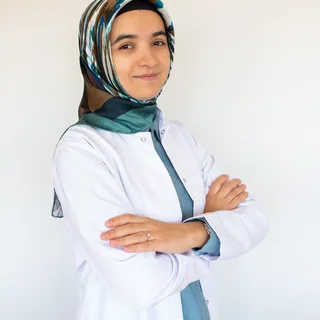
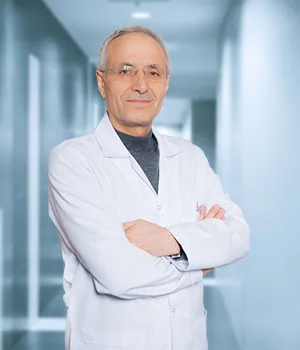
Ärzte, die im HealthTürkiye-Verzeichnis unter Augenheilkunde eingetragen sind. Das bestätigt nicht, dass ein Arzt diese Behandlung durchführt.
Doctors with a profile photo appear first; the rest appear in an order that changes every day. No one pays for their position.
Alle 821 Ärzte ansehenGrundlage sind die Fachabteilungen und Ärzte, die jede Einrichtung angibt. Das bestätigt nicht, dass die Einrichtung die Behandlung anbietet.

Medizinisches Zentrum · Seyhan, Adana
Fachabteilung: Ophthalmology13 gelistete Ärzte
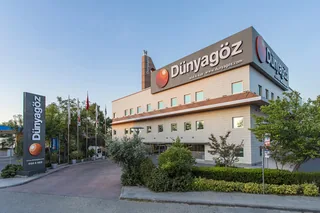
Krankenhaus · Bakırköy, İstanbul
Fachabteilung: Ophthalmology21 gelistete Ärzte

Medizinisches Zentrum · Büyükçekmece, İstanbul
Fachabteilung: Ophthalmology3 gelistete Ärzte
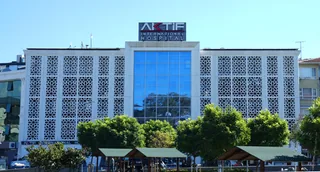
Krankenhaus · Üsküdar, İstanbul
Fachabteilung: Ophthalmology19 gelistete Ärzte


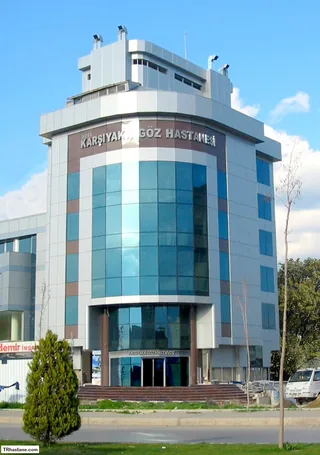

Profile mit mehr geprüften Angaben (Profiltext, Fotos, gelistete Ärzte) stehen oben. Keine Einrichtung bezahlt für ihre Position. Profiles with the same amount of information appear in an order that changes every day.
Alle 358 Einrichtungen für diese Behandlung ansehen