Neurologists in Türkiye
335 neurologists in Türkiye are listed on Medicaltour, practising at 240 private hospitals and clinics that hold the Ministry of Health's health-tourism authorization.
53 hold the title of professor. 27 are associate professors. 146 report 20 or more years of experience. 4 have education or training abroad stated on their clinic's website. Languages stated: English (23), Arabic (1), German (1). By city: Istanbul (125), Ankara (31), Izmir (26), Bursa (14), Antalya (12), Gaziantep (12).
- Experience
- 42 years
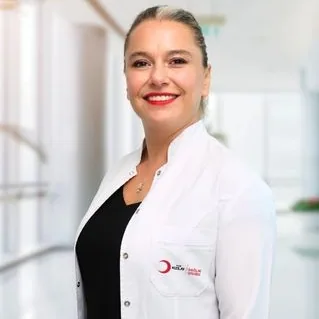
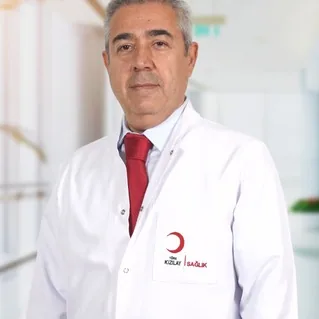
Müge Özcan
M.D. Specialist · الأمراض العصبية
Bakırköy Kızılay Niyazi Mete-Ali Rıza Mete Medical Center · Bakırköy, İstanbul
- Experience
- 15 years
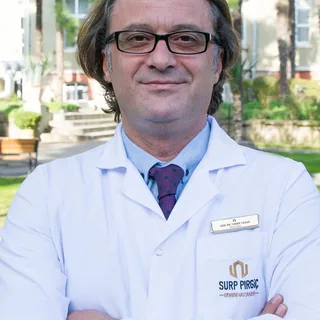
Tamer Yazar
Associate Professor · الأمراض العصبية
Yedikule Surp Pırgiç Armenian Hospital · Zeytinburnu, İstanbul
- Experience
- 18 years
- Education
- Graduated from Istanbul University Faculty of Medicine
- Training
- Specialty training in Neurology at Istanbul Bakırköy Prof. Dr. Mazhar Osman Mental Health and Nervous Diseases Training and Research Hospital
- Clinical interests
- Clinical electrophysiology (EMG, EEG), Movement disorders, Cognitive neurology, Migraine and other headache diseases, Cerebrovascular diseases, Epilepsy
- Memberships
- Member of Turkish Neurological Association
- Member of Turkish Clinical Neurophysiology Association
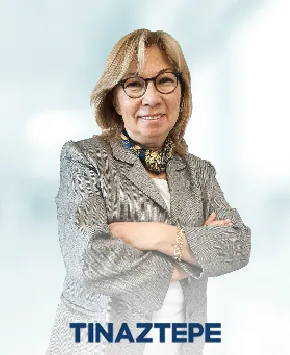
Gülşen Kocaman
Professor · الأمراض العصبية
Altınbaş University Medical Park Bahçelievler Hospital · Bahçelievler, İstanbul
- Experience
- 26 years
- Treatments
- الانسداد الودي عن طريق الجلد, بضع الجذور الظهرية الانتقائية, بضع الحبل السري عن طريق الجلد, تنفيذ جهاز تحفيز الدماغ, زرع جهاز تحفيز الدماغ العميق
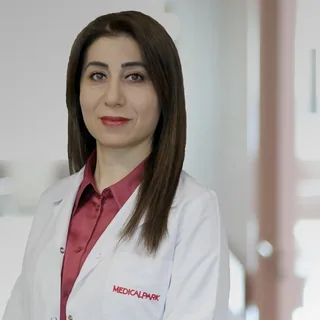
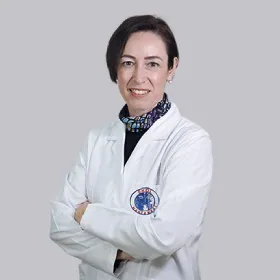
Leyla Babashova
M.D. Specialist · الأمراض العصبية
Altıntepe Kızılay Medical Center · Maltepe, İstanbul
- Experience
- 8 years
- Experience
- 6 years
- Experience
- 38 years
- Education
- Graduated from Cerrahpaşa Faculty of Medicine, Istanbul University
- Training
- Specialty training in Neurology at Gülhane Military Medical Academy
- Clinical interests
- Headaches, Vertigo, Epilepsy, Memory loss, Dementia, Alzheimer's disease, and 4 more
- Experience
- 35 years
- Education
- Graduated from Istanbul University Bursa Faculty of Medicine in 1978
- Training
- Specialty training in Neurosurgery at Izmir Atatürk Training and Research Hospital (1986–1991)
- Clinical interests
- Herniated disc (lumbar and cervical), Spinal stenosis, Spondylolisthesis, Spinal fractures, Brain hemorrhages, Brain tumors, and 4 more
- Memberships
- Member of Turkish Neurosurgery Society
- Experience
- 13 years
- Experience
- 16 years
- Experience
- 25 years
- Treatments
- الانسداد الودي عن طريق الجلد, بضع الجذور الظهرية الانتقائية, بضع الحبل السري عن طريق الجلد, زرع جهاز تحفيز الدماغ العميق
- Experience
- 34 years
- Experience
- 30 years
- Education
- Graduated from Çukurova University Faculty of Medicine in 1987
- Training
- Specialty training in Neurology at Çukurova University Faculty of Medicine Balcalı Hospital (completed 1994)
- Education
- Hacettepe University Faculty of Medicine
- Experience
- 26 years
- Education
- Graduated from Ondokuz Mayıs University Faculty of Medicine in 2000
- Training
- Specialty training at Erciyes University Faculty of Medicine (2010)
- Research fellowship in Human Motor Control at National Institutes of Health (NIH) / National Institutes of Neurological Disorders and Stroke (NINDS), USA (2014–2016)
- Memberships
- Member of American Academy of Neurology
- Member of European Sleep Research Society
- Member of World Association of Sleep Medicine
- and 3 more
- Training
- Neurology specialty training at Fırat University Faculty of Medicine
- Clinical interests
- Cerebrovascular diseases
- Experience
- 14 years
- Training
- Neurology residency at İzmir Tepecik Training and Research Hospital
- Clinical interests
- Interventional headache procedures (GON block, migraine botox)
Abdulkadir Koçer
Professor · الأمراض العصبية
Bahçeşehir University Medical Park Göztepe Hospital · Kadıköy, İstanbul
- Education
- Graduated from Marmara University Faculty of Medicine in 1992
- Training
- Specialty training at PTT Training and Research Hospital (1999)
- Master's degree in Electrodiagnosis (EEG-EMG) at Marmara University Institute of Neurological Sciences (2006)
- Minor specialization in Algology at the Ministry of Health (2011)
- and 1 more
- Experience
- 28 years
Bengi Bahar Demirbag
M.D. Specialist · الأمراض العصبية
Medical Park TEM Hospital · Sultangazi, İstanbul
- Experience
- 34 years
- Education
- Graduated from Ankara University Faculty of Medicine in 1992
- Training
- Specialty training in Neurology at Bakırköy Mental and Nervous Diseases Hospital (1992-1997)
- Clinical interests
- Headache syndromes (tension headache, migraine, cluster headache), Vertigo, Trigeminal neuralgia, Stroke, Epilepsy, Alzheimer's dementia, and 4 more
- Experience
- 20 years
- Education
- Graduated from Karadeniz Technical University Faculty of Medicine in 1991
- Training
- Specialty training in Neurology at Tepecik Training and Research Hospital (2000-2006)
- Experience
- 33 years
- Experience
- 16 years
- Experience
- 25 years
Mustafa Zafer Demirtaş
M.D. Specialist · الأمراض العصبية
Başkent University Alanya Hospital · Alanya, Antalya
- Experience
- 16 years
- Education
- Graduated from Mersin University Faculty of Medicine in 2010
- Training
- Specialty training in Neurology at Mersin University (2011–2016)
- Practical training in Sleep Medicine at Kahramanmaraş Sütçü İmam University (2016–2019)
- Research fellowship in Neurology at Glostrup Hospital, Denmark (2013)
- Clinical interests
- Sleep Medicine, Adult electrophysiology (EEG, nerve conduction studies, needle EMG, VEP), Pediatric headache disorders, Pediatric EEG interpretation, Movement disorders, Parkinson's disease, and 1 more
- Memberships
- Member of Turkish Neurological Society
- Member of Turkish Sleep Medicine Society
- Member of Turkish Medical Association
- and 3 more
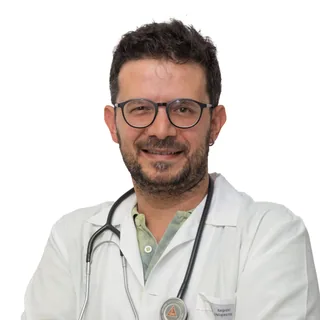
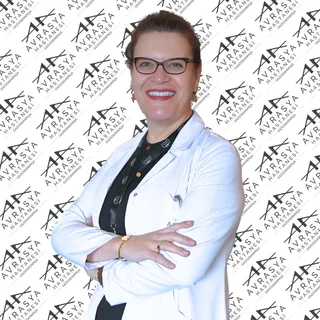
Beyza Deniz Bayar
M.D. Specialist · الأمراض العصبية
Avrasya Hospital (Gaziosmanpaşa) · Gaziosmanpaşa, İstanbul
- Experience
- 1 year
Where they practise
The hospitals and clinics where the most doctors on this list work.
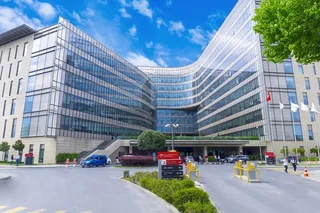
Foundation university hospital opened in 2014, part of VKV Health Institutions, with transplant, cancer, IVF and robotic surgery centers.
Koç University Hospital opened in 2014 as a foundation university hospital.
It belongs to VKV Health Institutions, the Vehbi Koç Foundation health group, which comprises 3 facilities.
- Founded
- 2014
- Doctors listed
- 221
- Group or operator
- Part of VKV Health Institutions (Vehbi Koç Foundation)
- Technology
- Da Vinci robotic surgery system, PET/CT, SPECT/CT, 3 Tesla MRI, Angiography, Endoscopic ultrasound (EUS)
- For international patients
- Transfer service
- Translation service
- Languages
- Albanian, Arabic, Bosnian, Bulgarian, English, French, German, Greek, Persian, Romanian, Russian, Serbian, Ukrainian, Uzbek
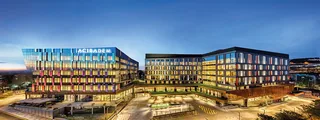
JCI-accredited Acıbadem Healthcare Group hospital opened in 2017, with bone marrow transplant, oncology, Gamma Knife Icon and Health Point services.
Acıbadem Altunizade Hospital opened in March 2017 as the 21st hospital of the Acıbadem Healthcare Group.
The building has been awarded a LEED Gold certificate as a green building.
- Founded
- 2017
- Doctors listed
- 199
- Capacity
- 350 beds
- Group or operator
- Acıbadem Healthcare Group
- Technology
- Triple hybrid operating theatre system with 3 Tesla MRI, 128-slice sliding CT and robotic-arm angiography, Intraoperative 3 Tesla MRI, Da Vinci robotic surgery system, Tomotherapy HDA, TrueBeam linear accelerator, VitalBeam and Gamma Knife Icon in the oncology unit, PET/CT, SPECT/CT, and 3 more
- For international patients
- Holds health tourism authorization certificate no. ST-0413
- International patient unit 'Health Point' serving in 16 languages
- Awards
- LEED Gold certified green building
- Languages
- Albanian, Arabic, Bosnian, Bulgarian, English, French, Georgian, Persian, Romanian, Russian, Serbian, Somali, Ukrainian, Uzbek
- Accreditations
- JCI
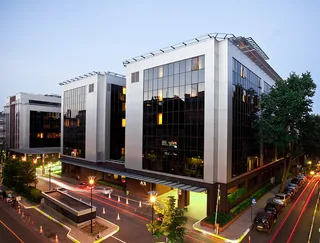
JCI-accredited Nişantaşı hospital in VKV Health Institutions: oncology, IVF, obesity surgery, Da Vinci robotic surgery and international services.
The hospital is part of VKV Health Institutions, the group that also includes Koç University Hospital and American Medical Center.
The official record lists 1995 as its foundation year, 185 doctors, 1862 personnel and 48 branches.
- Founded
- 1995
- Doctors listed
- 172
- Group or operator
- Part of VKV Health Institutions (with Koç University Hospital and American Medical Center)
- Technology
- Force CT, SPECT/CT, PET/CT, 3 Tesla MRI, Da Vinci robotic surgery system, TrueBeam radiotherapy system, Single-dose radiotherapy, 3D tomosynthesis mammography, and 2 more
- For international patients
- Translation service
- Transfer service
- Accommodation consultancy service
- Travel insurance consultancy service
- and 1 more
- Languages
- Albanian, Arabic, Bosnian, Bulgarian, English, French, Georgian, Persian, Romanian, Russian, Serbian, Ukrainian, Uzbek
- Accreditations
- ISO 27001, JCI
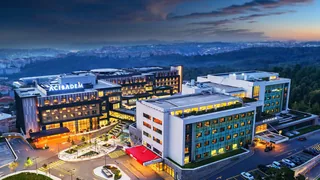
JCI-accredited Acıbadem Maslak Hospital, founded 2009: 231 beds, 75 chemotherapy rooms, robotic surgery, IVF center, NICU and Health Point Center.
Acıbadem Maslak Hospital was founded in 2009 within Acıbadem Healthcare Group, and the hospital states that a new building of 60 thousand m2 was added in an enlargement project finalized in 2018.
It lists 231 patient beds, 51 intensive care beds, 20 general operating rooms and 3 IVF operating rooms.
- Founded
- 2009
- Doctors listed
- 263
- Capacity
- 231 patient beds
- 20 general operating rooms and 3 IVF operating rooms
- Group or operator
- Part of Acıbadem Healthcare Group
- Technology
- TrueBeam, da Vinci, EOS, whole-body MRI, Trilogy, intraoperative radiotherapy, PET-CT, MR Linac and Rapid Arc, Force CT, SPECT-CT, 3 Tesla MRI, Intraoperative 3 Tesla MRI, Single-dose radiotherapy, 3D tomosynthesis mammography, and 2 more
- For international patients
- Health tourism authorization certificate number ST-0292
- Health Point Center for international patients follows their diagnostic and treatment processes
- Languages
- Albanian, Arabic, Bulgarian, English, French, Georgian, Russian, Serbian
- Accreditations
- ISO 9001, JCI
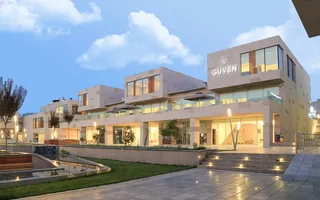
Ankara hospital founded in 1975, part of Güven Healthcare Group, with JCI and Planetree Gold accreditation and organ and bone marrow transplant centers.
Joint Commission International (JCI) first accredited the hospital in 2008 and accredited it again in 2011, 2014, 2017, 2020 and 2023.
Founded in 1975, Ankara Güven Hospital belongs to Güven Sağlık Grubu, also known as Güven Healthcare Group.
- Founded
- 1975
- Doctors listed
- 133
- Group or operator
- Part of Güven Sağlık Grubu (Güven Healthcare Group)
- Technology
- Force CT, SPECT/CT, PET/CT, 3 Tesla MRI, Intraoperative 3 Tesla MRI, TrueBeam radiotherapy system, Single-dose radiotherapy, 3D tomosynthesis mammography, and 4 more
- For international patients
- Transfer service
- Translation service
- Accommodation consultancy service
- Languages
- Albanian, Arabic, Bosnian, Bulgarian, English, French, Georgian, Italian, Russian, Somali, Uzbek
- Accreditations
- JCI
Questions about this list
How many neurologists in Türkiye are listed?
335 neurologists in Türkiye are listed on Medicaltour, practising at 240 private hospitals and clinics that hold the Ministry of Health's health-tourism authorization.
Who are the most experienced neurologists in Türkiye?
By the years of experience reported on HealthTürkiye: Ahmet Mübin Aydın (50 years), Mahmut Özten (50 years) and Ufuk Utku (49 years).
Where do neurologists in Türkiye practise?
They practise at 240 private hospitals and clinics that hold the Ministry of Health's health-tourism authorization. The most doctors on this list work at Koç University Hospital (12), Acıbadem Altunizade Hospital (6) and VKV American Hospital (6).
How many neurologists in Türkiye are professors?
Of the 335 listed, 53 hold the title of professor and 27 are associate professors, as registered on HealthTürkiye.
How many neurologists in Türkiye trained abroad?
4 have education or training abroad stated on their clinic's website. Countries stated: Germany (1), Denmark (1), United Kingdom (1), United States (1).
Which languages do neurologists in Türkiye speak?
Languages stated for individual doctors on their clinics' websites: English (23), Arabic (1), German (1).
Which cities have the most neurologists in Türkiye?
By the city on the Ministry of Health's list: Istanbul (125), Ankara (31), Izmir (26), Bursa (14), Antalya (12), Gaziantep (12).
About this specialty
In EnglishNeurology deals with conditions of the brain, spinal cord and nerves, and with tests such as EEG and lumbar puncture that help investigate them.
What this specialty covers
Neurology focuses on the nervous system: the brain, the spinal cord and the nerves. More than 600 diseases can affect this system. Some are inherited, such as Huntington's disease and muscular dystrophy, while others, such as spina bifida, come from problems in how the nervous system forms. In Parkinson's disease and Alzheimer's disease, nerve cells become damaged or die. The field also covers stroke, which affects the blood vessels feeding the brain, and injuries to the brain or spinal cord. Seizure disorders such as epilepsy, brain tumors and infections such as meningitis are part of it too.1
Epilepsy is a long-term brain condition that affects around 50 million people around the world, and it cannot be caught from another person. A seizure happens when a group of brain cells releases too much electrical activity. Epilepsy is usually described as two or more seizures that occur without a clear trigger.2
Who it is usually for
Problems in the nervous system can make it hard to move, speak, swallow, breathe or learn. They can also change memory, the senses or mood. Having one seizure on its own does not mean a person has epilepsy. For people with epilepsy whose seizures do not respond well to medicines, surgery may help.1,2
What a visit usually involves
A common test is the EEG (electroencephalogram), which records the electrical activity of the brain. Small silver discs known as electrodes are held on the scalp with a sticky paste, and the test usually lasts about an hour. The person may be asked to look at a flashing light, take deep breaths, or open and close their eyes. Hair should be clean and dry with no gel or wax, and eating and drinking are usually fine beforehand. Other forms include a sleep EEG in hospital, an ambulatory EEG with a portable recorder worn during daily life, and a video telemetry EEG, usually run over a few days in hospital.3
A lumbar puncture may be used to check whether symptoms come from a condition of the brain or spine. After a local anaesthetic is injected in the lower back, a needle is passed between the bones of the spine. Cerebrospinal fluid, the fluid inside the spine, may be collected in small tubes for testing. The procedure usually takes 15 to 20 minutes, though it can last longer. It may feel uncomfortable but should not hurt.4
Treatment and follow-up
After an EEG, most people can go home and return to their usual routine. A specialist has to analyse the recording, so results may take days or weeks, and further EEGs are sometimes requested.3
After a lumbar puncture, people are usually watched in hospital for around 1 to 2 hours. Resting for at least 24 hours and drinking plenty of fluids are advised. People are asked to hold off on physical work, heavy lifting and sport until they feel ready, and getting back to normal may take a few days, or longer for some.4
With appropriate use of antiseizure medicines, up to 70% of people with epilepsy could become free of seizures. A doctor may think about stopping these medicines once a person has gone 2 years with no seizures.2
Risks to discuss with your doctor
Lumbar puncture is generally a very safe procedure. Headache and back pain afterwards are common and should ease within a few days. Bleeding or clear fluid may leak from where the needle went in. Complications are extremely rare. They can include double vision, or nerve damage that may leave lasting pain, tingling or numbness in the arms or legs. Driving is not possible after a sleep-deprived EEG, so a lift home should be arranged.3,4
Injuries during seizures, such as broken bones and bruising, are more common among people with epilepsy. Their risk of dying early is up to three times that of the general population.2
Questions to ask a clinic
- Can someone else stay in the room with me as a chaperone during the EEG?3
- Should I pause any of my medicines for a short time before a lumbar puncture?4
- What happens if the lumbar puncture proves difficult and a second appointment is needed?4
- Will there be a follow-up appointment to go through my EEG results?3
- How can your team help if I feel anxious about needles?4
Other specialties
- Dentists in Türkiye (4,241)
- Internal medicine specialists in Türkiye (1,314)
- Gynecologists and obstetricians in Türkiye (1,170)
- Pediatricians in Türkiye (914)
- ENT specialists in Türkiye (892)
- Ophthalmologists in Türkiye (821)
- General surgeons in Türkiye (806)
- Plastic surgeons in Türkiye (767)
- Orthopedic surgeons in Türkiye (699)
- Anesthesiologists in Türkiye (674)
- Oral and maxillofacial surgeons in Türkiye (605)
- Radiologists in Türkiye (528)
Specialty is the department each doctor is registered in on HealthTürkiye, the official health-tourism portal.